
If you have ever filed an insurance claim, you’ve likely heard a contractor say, “We work with your insurance provider.” While it sounds reassuring, this phrase is often a marketing catch-all that masks several different types of business relationships.
To make an informed decision for your home, it is essential to understand who your contractor is actually accountable to.
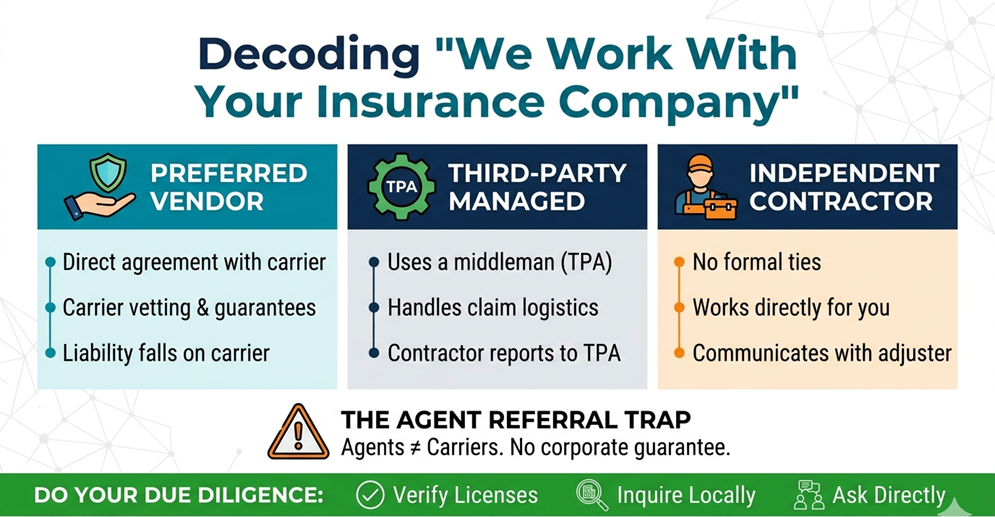
Not all contractor-carrier relationships are created equal. Generally, they fall into three categories:
• Preferred Vendors: These contractors have a formal, direct agreement with the insurance carrier. The insurance company “vets” them and, in many cases, guarantees their work. If the project isn’t finished to satisfaction, the liability often falls back on the carrier.
• Third-Party Managed: Some contractors work through a third-party administrator that handles the claim logistics between the contractor and the insurer.
• Independent Contractors: These companies have no formal tie to the carrier. When they say they “work with” your insurance, they simply mean they are willing to speak with your adjuster to navigate the claim and reach an agreement on the scope of repairs.
The Insurance Agent Referral Misconception

A common misconception is that a referral from your insurance agent is the same as a recommendation from the insurance company.
In reality, many local agents refer contractors they know personally or professionally, even if those contractors are not part of the carrier’s preferred vendor program. Because the agency and the claims department often operate independently, an agent’s referral doesn’t carry a corporate guarantee. In fact, adjusters sometimes find that these “agent-referred” contractors can make the claims process more difficult if they aren’t familiar with specific carrier requirements.
Standards vs. Autonomy
There are pros and cons to each choice:
• Preferred Vendors are held to strict documentation standards and rigorous deadlines to remain in the program.
• Independent Contractors may offer more autonomy, working solely for the homeowner without being “under the influence” of the carrier’s cost-saving measures.
Neither path guarantees better craftsmanship; quality depends on the individual company’s integrity.
Do Your Due Diligence
Regardless of how a contractor markets themselves, transparency is key. They should be able to clearly define their relationship with your insurer without using misleading verbiage.
Before signing a contract, protect your investment by doing your own research:
• Verify Licenses: Check for any state-level violations or disciplinary actions. Which you can do by going to iceestimates.com/resources/
• Inquire Locally: Contact the state licensing board to see if the company is under investigation.
• Ask Directly: Ask the contractor, “Are you a contractually obligated preferred vendor for my carrier, or do you just handle the communication with them?”
Knowing the difference ensures you aren’t just hiring a marketing strategy—you’re hiring the right partner for your home.